Pocta preosiatym
Tomáš Brichta – Pocta preosiatym, 2026
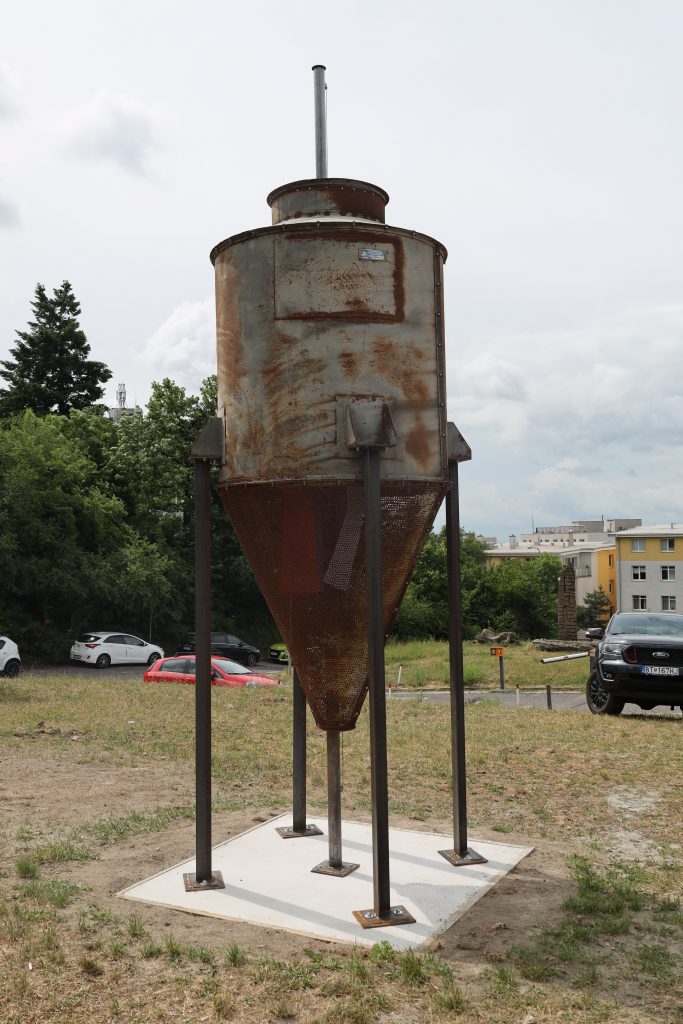
objekt, 1,5 x 1,5 x 4,30 m
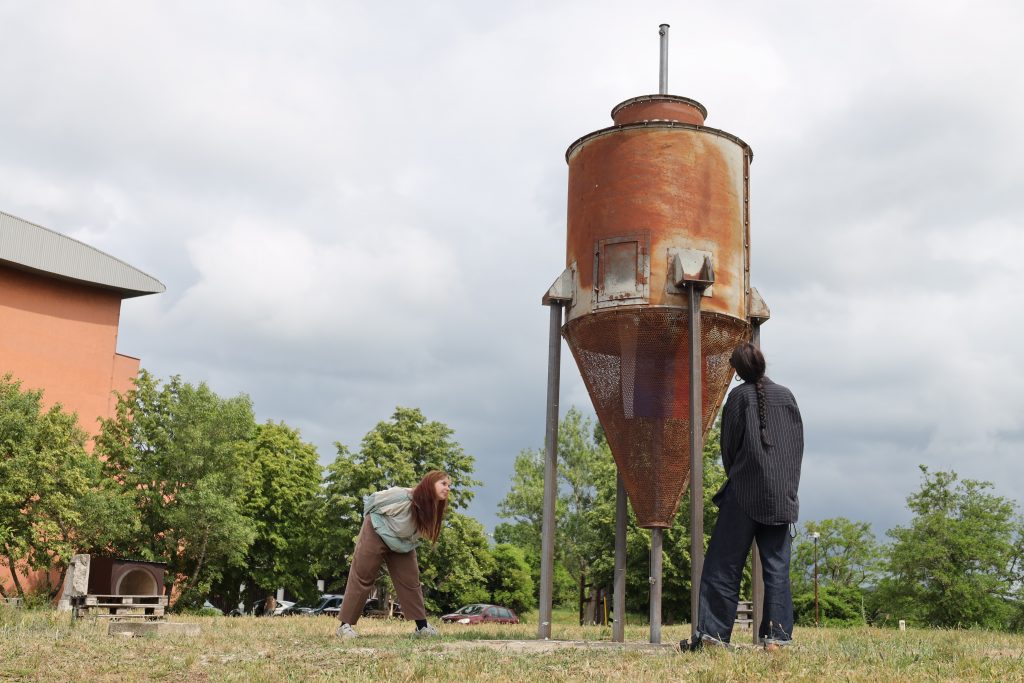
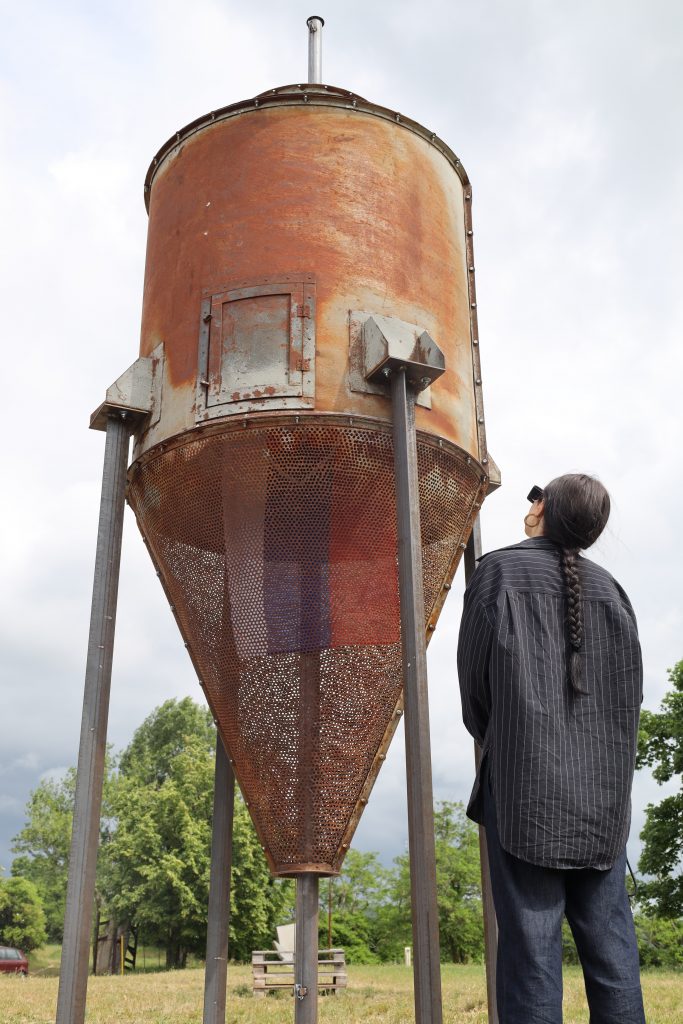
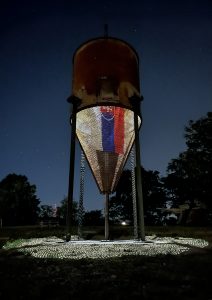
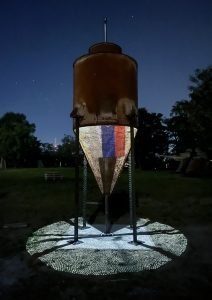
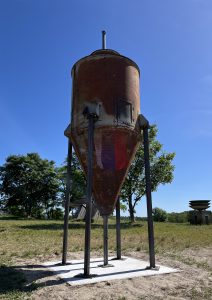
Autor pracuje s objektom starého poľnohospodárskeho sila, ktoré v minulosti slúžilo na uchovávanie úrody. Manuálnou perforáciou jeho spodnej časti vzniká z lievika organické sito. Silo sa týmto zásahom stáva obrazom systému, ktorý nedokáže „úrodu“ ochrániť a udržať pokope. Úroda nie je stabilnou hodnotou. To, čo je dôležité, sa môže bez starostlivosti pokaziť a naopak z toho, čo prepadne, môže vzniknúť nová úroda vo forme skúsenosti a pamäte.
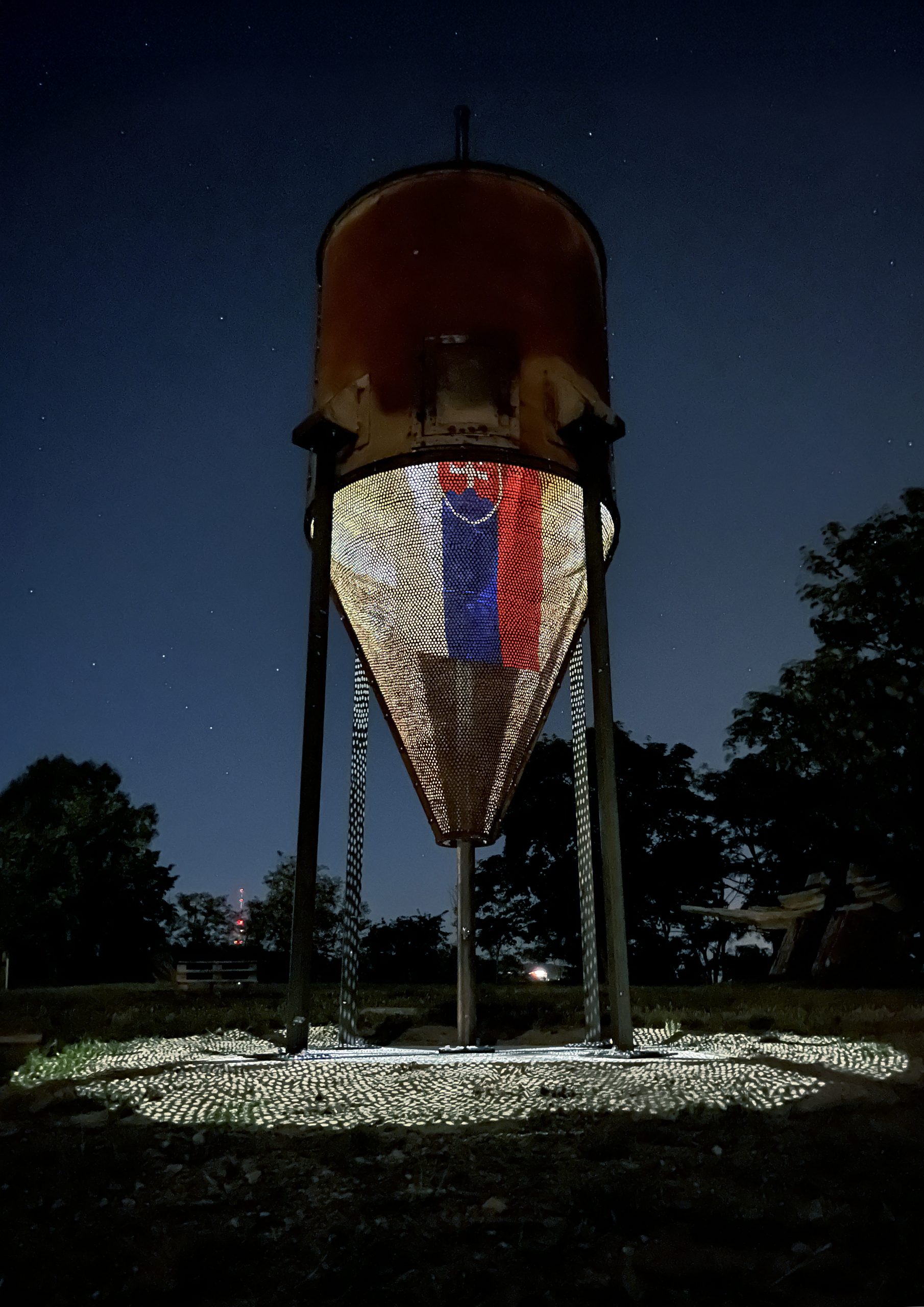
Stredom objektu prechádza stožiar so slovenskou vlajkou. Vlajka “na pol žrde” je vizuálnou metaforou – tichou pietou za tých, ktorí strácajú svoj hlas, boli prehliadnutí, neprijatí alebo „prepadli cez sito“. Je to gesto tichého smútku, reflexiou stavu kultúry a fragmentácie národnej identity. Perforácia je zrkadlom procesov, ktoré symbol obklopujú, nie jeho deštrukciou. Dielo tak nevytvára rozpad, ale sprítomňuje moment, v ktorom k nemu dochádza. Otvára otázky o tom, či môže národná identita zostať celistvá, ak vytesňuje časti kultúry, ktoré ju formujú.
Autorský statement k použitiu štátnych symbolov
Toto dielo používa štátnu vlajku ako nositeľa významu, nie ako objekt znevažovania. Je realizované v rámci ústavou zaručenej slobody umeleckého prejavu, ktorej neoddeliteľnou súčasťou je aj schopnosť klásť kritické otázky o stave spoločnosti a jej symboloch. Forma vlajky spustenej do polovice žrde nie je použitá v zmysle oficiálneho štátneho smútku, ale ako vizuálna metafora. Predstavuje symbolickú pietu za tých, ktorí v spoločnosti strácajú svoj hlas, boli prehliadnutí, neprijatí alebo „prepadli cez sito“. Je to gesto tichého smútku, ktorý je prítomný v občanoch, reflexia stavu kultúry a fragmentácie národnej identity. Vlajka v diele nie je poškodená ani znehodnotená. Zobrazený stav nie je výsledkom autorského úmyslu symbol hanobiť alebo zneužiť, ale racionálnou umeleckou voľbou nevyhnutnou pre vyjadrenie posolstva diela. Cieľom nie je útok na štátne symboly, ale snaha o ich navrátenie do rúk ľudu a hľadanie novej formy spoločnej spolupatričnosti. Ako autor sa zaväzujem k pravidelnej údržbe diela a kontrole stavu vlajky, aby bola zachovaná jej dôstojnosť a čistota po celú dobu trvania inštalácie.
Technická podpora: Martin Hrvol, Tomáš Brichta st.
Homage to the Sifted, 2026
Object/Installation, 1.5 x 1.5 x 4.30 m
The author works with the object of an old agricultural silo that once served to store the harvest. Through manual perforation of its lower part, the funnel is transformed into an organic sieve. Through this intervention, the silo becomes an image of a system that is unable to protect and hold the “harvest” together. The harvest is not a stable value. What is important can decay without care, and conversely, from what falls through, a new harvest may emerge in the form of experience and memory.
A mast bearing the Slovak flag runs through the center of the object. The flag at half-mast serves as a visual metaphor – a quiet tribute to those who are losing their voice, have been overlooked, unaccepted, or have “fallen through the sieve.” It is a gesture of silent grief, reflecting the state of culture and the fragmentation of national identity. The perforation is not the destruction of a symbol but a mirror of the processes that surround it. The work does not create disintegration; rather, it makes present the moment in which it occurs. It raises questions about whether national identity can remain whole if it excludes parts of the culture that
shape it.
Author’s statement on the use of state symbols
This work uses the national flag as a bearer of meaning, not as an object of desecration. It is created within the constitutionally guaranteed freedom of artistic expression, including the ability to raise critical questions about society and its symbols. The flag lowered to half-mast is not used as official state mourning, but as a visual metaphor. It represents a symbolic tribute to those who lose their voice, are overlooked, unaccepted, or “fall through the sieve.” It expresses silent grief present among citizens and reflects the state of culture and the fragmentation of national identity.
The flag is neither damaged nor devalued. Its condition is not intended to defame or misuse the symbol, but is a deliberate artistic choice necessary to convey the work’s message. The aim is not to attack state symbols, but to return them to the people and seek a renewed sense of shared belonging. The author commits to regular maintenance of the work and to monitoring the condition of the flag, ensuring its dignity and cleanliness throughout the duration of the installation.
Technical support: Martin Hrvol, Tomáš Brichta sr.